Facebook Live Chat as an effective business tool in the UAE


To consistently grow your business towards success, you must always be on the lookout for new ways to improve customer experience. While 65% of customers are more likely to return to a website with live chat support, many have installed a chat widget on their website to assist their customers. Since the chat widget is easily available for free, incorporating it can only bring advantages to your business.
Facebook is a common means of communication between businesses and customers, as it takes up 78.7% as one of the most popular social media platforms in the UAE. This shows that having a Facebook Live Chat for your business will encourage more customers to engage with your brand through conversations.
What is Facebook Live Chat?


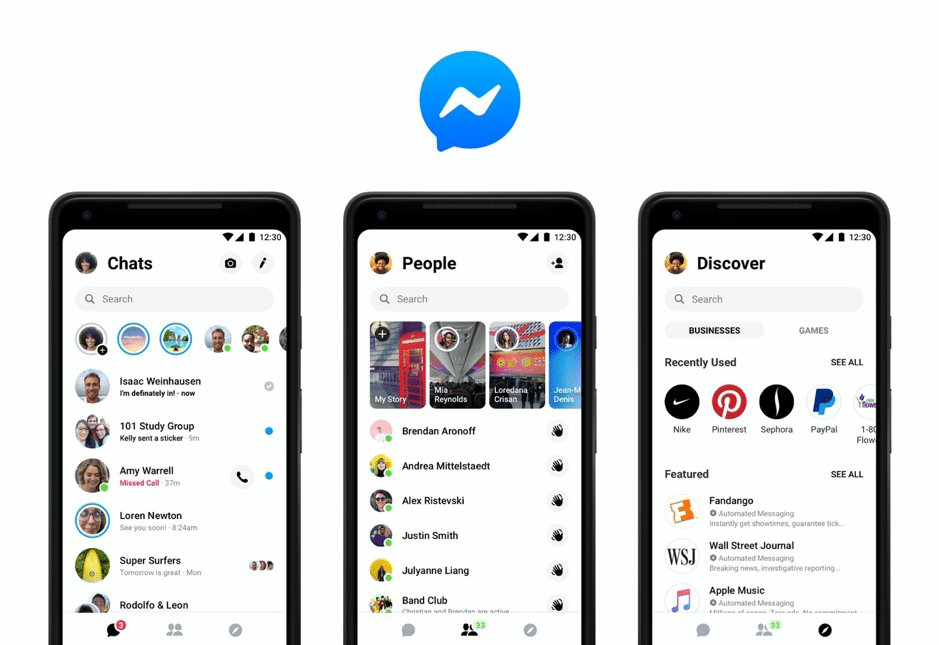
Facebook Live Chat or Facebook Messenger Live Chat is one of the Facebook features for business that allows businesses to communicate with their customers in real time. This feature allows businesses to offer immediate assistance, answer questions, and resolve issues, making it an effective tool for improving customer satisfaction. The feature is accessible and customizable through Facebook Messenger, which has over 1.3 billion monthly active users globally.
Find out how to add Messenger to your website from your Facebook Page.
Why use Facebook Live Chat for your business in the UAE

The UAE is a highly competitive market, and businesses need to differentiate themselves from their competitors to survive. Facebook Live Chat support provides businesses with an opportunity to offer an exceptional customer experience that can set them apart from their competitors. Here are some reasons why Facebook Live Chat is an effective business tool in the UAE.
1. Immediate assistance
Facebook Live Chat allows businesses to offer immediate assistance to their customers, making it a convenient and efficient way to resolve customer queries. In a fast-paced society like the UAE, customers want their questions answered quickly, and Facebook Live Chat support provides them with that option.
2. Cost-effective
Setting up and maintaining a Facebook Messenger Live Chat is a cost-effective alternative to traditional customer service methods. Instead of investing in expensive call centers, businesses can use a Facebook Live Chat Bot to provide customer support, saving them money in the long run.
3. Increased customer satisfaction
Offering customers a convenient and fast way to communicate with businesses can significantly improve customer satisfaction. Customers appreciate businesses that value their time and provide them with easy access to support. By using Facebook Live Chat, businesses can increase their customer satisfaction levels and build brand loyalty.
4. Improved customer engagement
Facebook Live Chat is a great way to engage with customers and build relationships. By offering personalized assistance and support, businesses can create a positive impression on their customers, which can lead to increased customer engagement and loyalty.
5. Increased sales
Offering exceptional customer service can lead to increased sales. Customers who are satisfied with their experience are more likely to make repeat purchases and recommend the business to others. Facebook Live Chat support provides businesses with an opportunity to offer exceptional customer service, which can translate into increased sales and revenue.
6. Competitive advantage
In the highly competitive UAE market, businesses need to differentiate themselves from their competitors. By offering exceptional customer service through Facebook Live Chat, businesses can stand out from their competitors and gain a competitive advantage.
{{__phrase_faq-title__}}
What makes Messenger-based customer service different in the UAE
Customer service in the UAE sits in one of the most digitally mature environments in the region. DataReportal estimates there were 11.3 million internet users in the UAE at the end of 2025, equal to 99.0% internet penetration, alongside 12.5 million social media user identities, equivalent to 110% of the total population. That helps explain why customer conversations in the UAE move quickly across platforms and why businesses cannot treat chat support as a side channel anymore.
That same market reality makes mobile-first support especially important. KPMG describes the UAE as being at the forefront of digital transformation, with high smartphone penetration and a tech-savvy consumer base driving demand for seamless, personalized customer interactions. In practice, that means support workflows need to work well inside messaging apps, load quickly on mobile, and make it easy for customers to move from question to action without switching channels or repeating themselves.
The UAE also has multilingual service expectations, which changes how businesses should think about automation and handoff. The UAE government states that Arabic is the official language, while English is widely spoken in business and everyday life. That means Messenger-based customer service in the UAE should not just be fast; it should also be able to handle Arabic and English smoothly, and often support broader multilingual escalation depending on the business’s audience.
Messenger can still matter in this market, especially for customers already engaging through Facebook and website chat. DataReportal says Messenger’s ad reach in the UAE was 5.65 million users in late 2025, equal to 49.5% of the total population and 50.0% of the local internet user base. But Messenger should not be viewed in isolation. Meta’s own business messaging guidance positions customer conversations across Messenger, Instagram, and WhatsApp, which is a better reflection of how buyers actually move between channels today. In other words, Messenger may be important for some audiences, but WhatsApp and Instagram DM often matter too.
That is why UAE businesses should think omnichannel from the beginning, not after scaling. KPMG’s UAE customer experience reporting says UAE customers want more personalized experiences and seamless, omnichannel processes. So the real question is not whether Messenger is useful on its own. It is whether your support setup lets a customer start on a website widget, continue in Messenger, and later move to WhatsApp or Instagram DM without losing context. In the UAE, that is usually the difference between a basic chat tool and a genuinely strong customer communication strategy.
How to use Facebook Live Chat for your business in the UAE

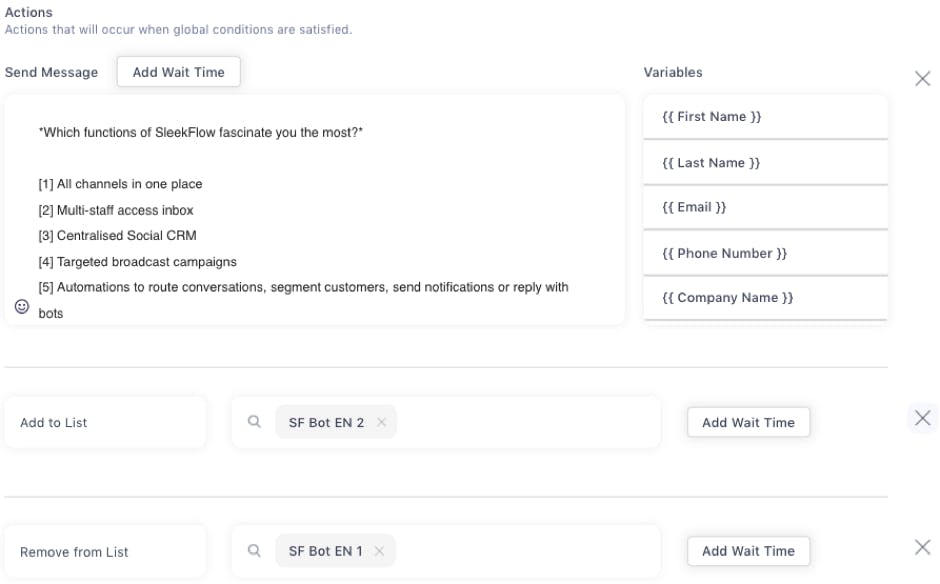
Now that we've established the benefits of Facebook Live Chat as an effective business tool in the UAE let's explore how to use it for your business. Here are some ways businesses can use Facebook Live Chat to improve their customer experience and increase sales.
Facebook Live Chat for customer support
Businesses can use a Facebook Live Chat Bot to provide immediate assistance to their customers, answer FAQs, and resolve issues. Here are some tips for using Facebook Live Chat for customer support:
Set up Facebook Messenger auto replies to ensure that your response time is quick for a positive customer experience
Have a team of dedicated customer service agents who are trained to handle different types of customer inquiries
Use automation and chatbots to provide instant replies to common questions and help direct customers to the appropriate support team
Automate order status or shipping updates for customers who prefer using Facebook Messenger
Collect customer feedback on products or services, which can help businesses improve their offerings and better meet their customers' needs

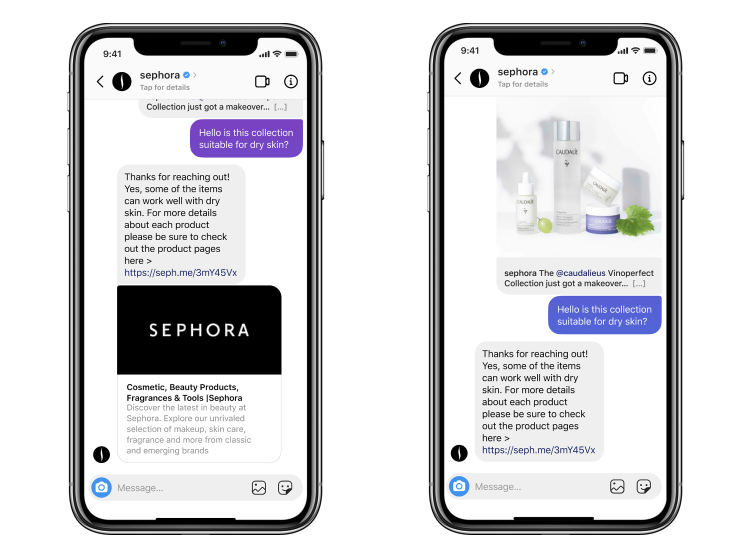
Facebook Live Chat for sales
Facebook Live Chat is also great for offering a seamless shopping experience, other than answering product questions and addressing customer concerns. Here are some tips for using Facebook Live Chat for sales:
Use Facebook Live Chat to provide personalized product recommendations based on customer inquiries, increasing the chances of a sale
Use Facebook Live Chat to provide in-chat payment links once the queries are resolved, reducing the need for additional steps and providing customers with a smooth transaction experience
Provide after-sales support, addressing any concerns or issues that customers may have with their purchase, increasing customer satisfaction and loyalty
By incorporating automation and personalization into your Facebook Messenger Live Chat strategy, businesses can provide an exceptional customer experience that sets them apart from their competitors.
How to add Facebook Messenger chat to your website

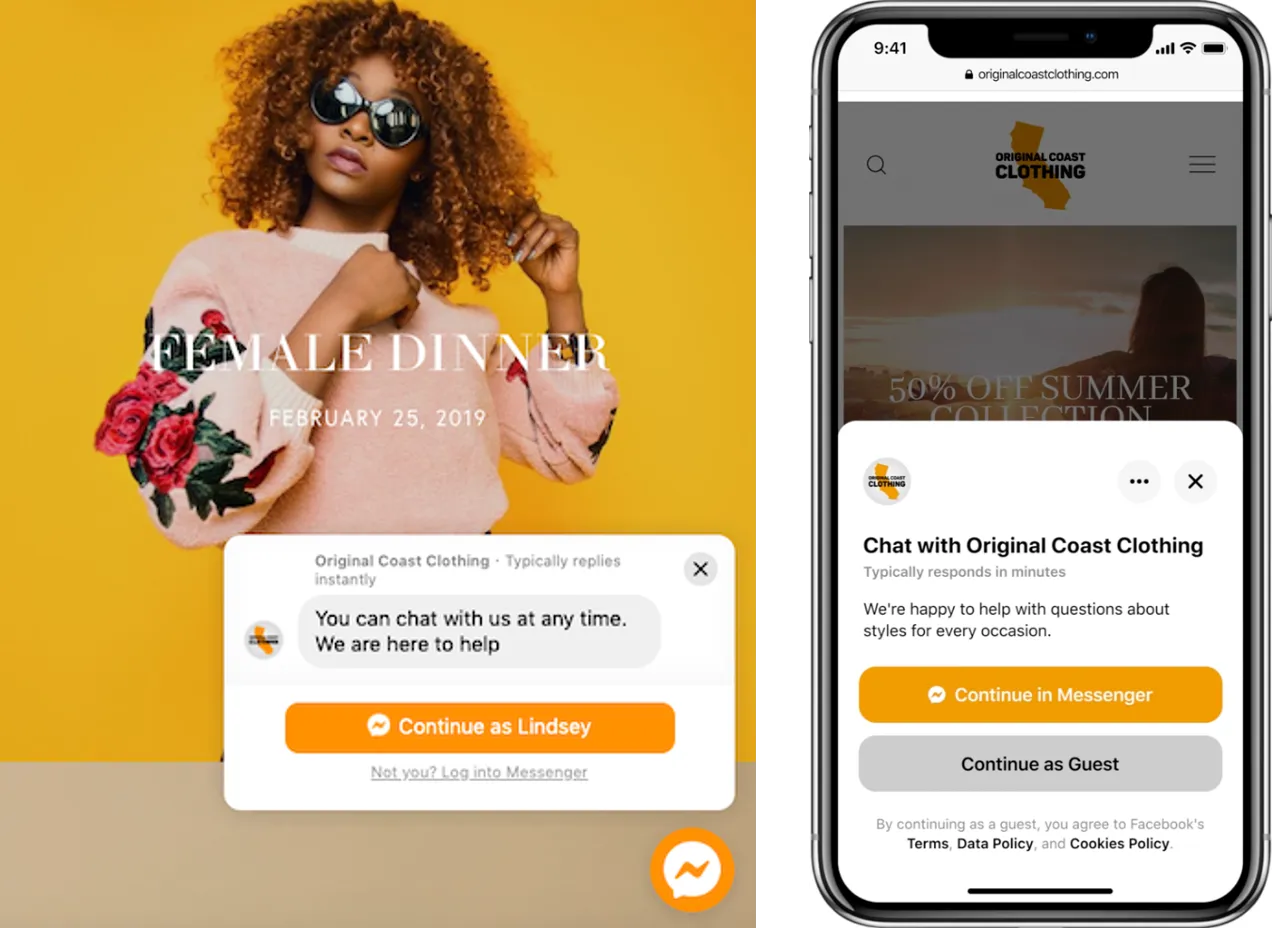
To enhance the experience of your website visitors, you can add Messenger to your website with the following steps:
Go to “Settings” on your Facebook Page, and select “Messaging”.
Under “Add Messenger” to your website, click “Get started”.
To install manually, select "Set up". You can then choose your preferred language, specify your website domain(s), and obtain the code for integration into your website.
For initiating conversations, craft a welcoming message and set up automated responses to address frequently asked questions.
Customize the chat plugin options by adjusting the color scheme, alignment, and expansion settings to align with your website's aesthetics.
After you've completed the chat plugin setup from your Page, you can paste the code directly into your website from your preferred website builder.
For the full instructions on specific website builders or CMS, visit Facebook’s guide.
While businesses can choose to manage their Facebook Messenger messages on Facebook Business Manager, there can be some limitations. For example, you can only reply to customer messages on Facebook Messenger and Instagram DM. If a customer decides to send a message through WhatsApp after some time, you might not be able to track the conversation history. To satisfy channel hopping customers these days, brands should learn to incorporate an omnichannel live chat that includes Facebook Live Chat, WhatsApp, and more popular channels.
When should UAE businesses use Messenger on their website?
Messenger can still be a useful website chat option in the UAE, but it works best in specific situations. It is not the right default for every business. The better question is not “Should I add Messenger?” but “Is Messenger the right website chat channel for the way my customers already communicate?”
Use it when customers already follow your Facebook Page
Messenger makes the most sense when your audience is already active in the Facebook ecosystem. If customers regularly discover your business through Facebook, engage with your Page, or click through from Facebook ads, adding Messenger to your website can reduce friction because they are continuing the conversation in a familiar channel.
Use it when you want website-to-Messenger continuity
Messenger is also a good fit when you want website visitors to start a conversation on your site and continue it later in Messenger. That continuity can be helpful for businesses that want to keep a support or sales conversation going after the customer leaves the website, especially if the user is already comfortable using Facebook Messenger.
Use it when customer support is chat-friendly and low-friction
Messenger works best for support scenarios that are quick, conversational, and easy to resolve through chat. That includes basic product questions, service inquiries, booking interest, order follow-up, store information, or routing a customer to the right team. If most of your customer interactions can be handled through short back-and-forth conversations, Messenger can be a practical website chat option.
Do not use it as your only channel if your buyers strongly prefer WhatsApp
Messenger should not be your only website messaging option if your audience primarily prefers WhatsApp. In many UAE customer journeys, WhatsApp plays a stronger role in support, follow-up, and service coordination. If your buyers naturally move to WhatsApp after their first inquiry, relying on Messenger alone can add friction instead of removing it.
Use it as part of an omnichannel strategy, not as a solo widget
The strongest setup is usually not Messenger alone. Customers in the UAE increasingly expect personalized experiences and seamless omnichannel processes, which means businesses should think about continuity across Messenger, WhatsApp, Instagram DM, and website chat from the start. In practice, Messenger works best when it is one channel inside a broader customer communication strategy, not a standalone widget expected to do everything.
A simple rule is this: use Messenger when it matches how your audience already engages, but build for omnichannel continuity if you want to deliver the kind of seamless experience UAE customers increasingly expect.
Messenger vs WhatsApp vs Instagram DM: which channel should UAE businesses prioritize?
The right channel depends on where the conversation starts and what the customer needs next. Messenger is useful when customers already engage with your Facebook Page or when you want website-to-Messenger continuity. WhatsApp is often stronger for high-intent support, service coordination, reminders, and follow-up once the customer is ready to take action. Instagram DM is usually the better fit for discovery, social selling, and retail or lifestyle inquiries that begin from content, ads, or profile visits.
For most UAE businesses, the best approach is not to choose just one. It is to assign each channel a role. Use Messenger for Facebook-linked and website chat journeys, WhatsApp for deeper support and conversion conversations, and Instagram DM for discovery-led engagement. This makes the strategy more practical for customers who switch channels instead of staying in one app.
Equip your UAE business with SleekFlow’s omnichannel live chat


Using SleekFlow’s omnichannel live chat solution, you can add Messenger to your website, integrate Facebook Live Chat with other messaging channels, and manage all your customer conversations in one platform. In this case, even after the customers leave your website, you can still continue the conversation on whichever messaging channel they prefer.

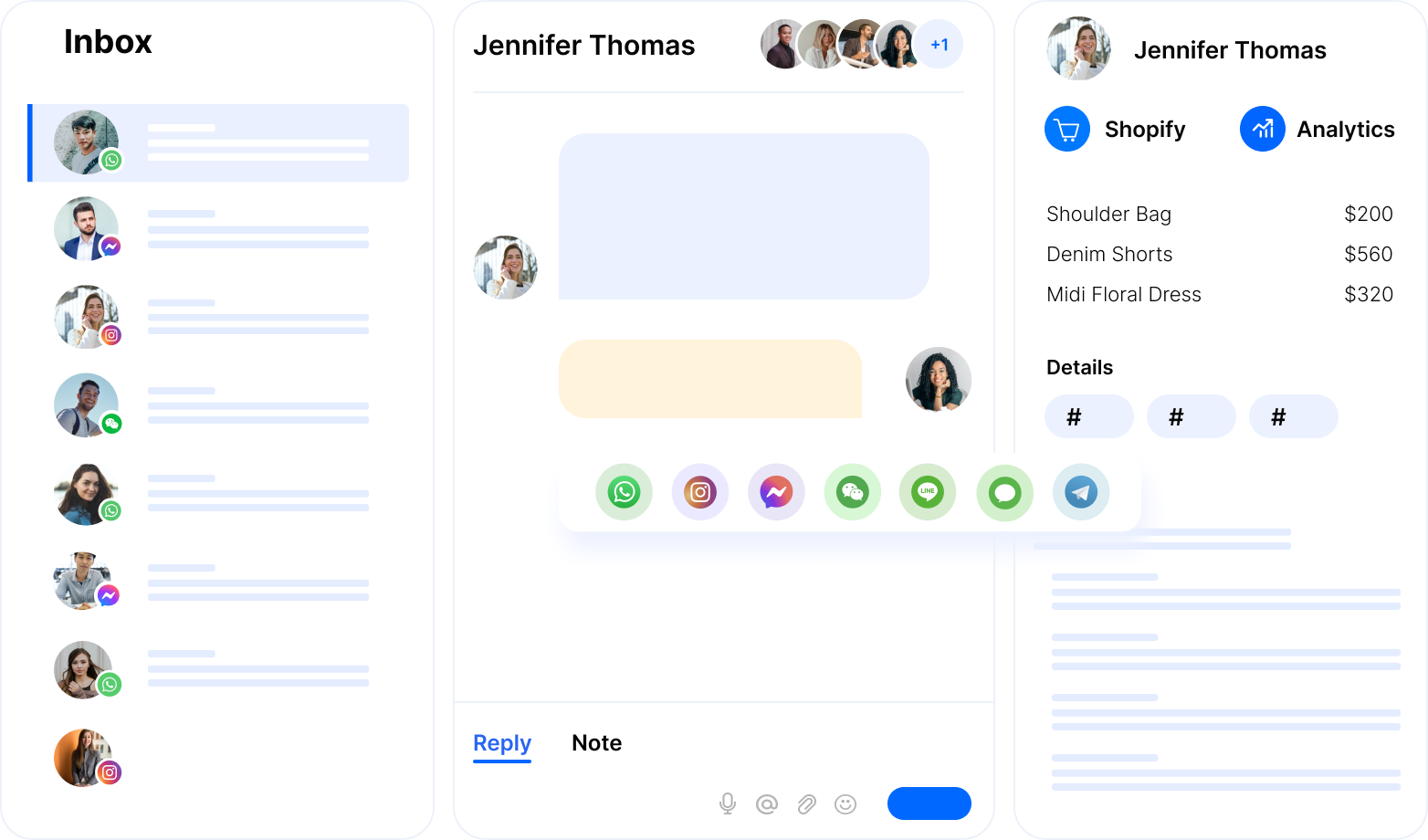
Moreover, SleekFlow also has many other additional tools that can be helpful for your business in the UAE:
All-in-one inbox to manage all conversations simultaneously with your team members, no matter if the messages are from WhatsApp, WeChat, LINE, Telegram or more
Chatbot builder to automate responses and improve efficiency
Automated workflows for customer service and sales processes
Customizable chat widgets and branding options
Detailed analytics and reporting to track performance and customer satisfaction
Team collaboration tools for internal communication and task delegation
Integrations with existing CRM or e-commerce platform for an integrated, seamless workflow and improved customer satisfaction
Start with a free account and install Facebook Live Chat on SleekFlow today.
{{__phrase_faq-title__}}
{{__phrase_share-article__}}